

- August 11, 2025
Balancing Act: Compliance and Innovation in India’s Digital Frontier
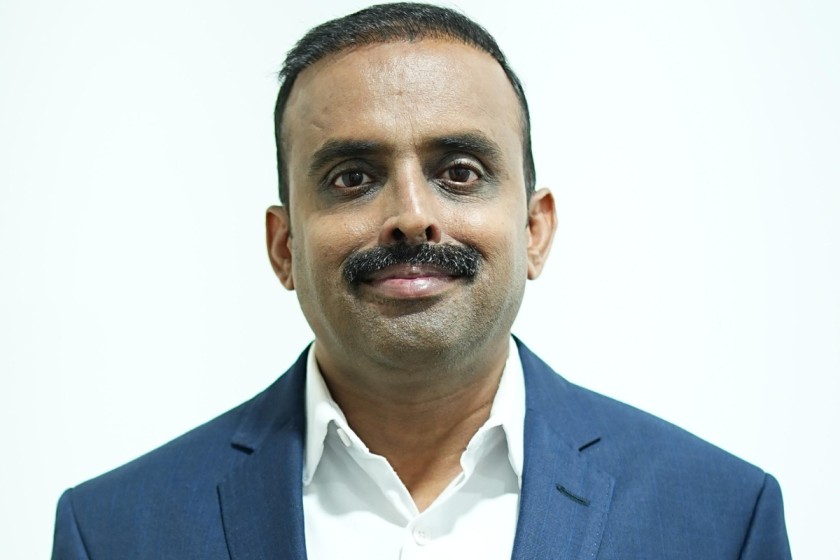
As India’s digital transformation accelerates, NEC Corporation India stands at the forefront, powering critical infrastructure like Aadhaar, Smart Cities and biometric security. Stepping into this high-stakes arena is Mahesha D, Executive Vice President and Chief Financial Officer of NEC Corporation India, who is tasked with a complex balancing act: navigating escalating global compliance demands while fuelling the innovation and growth essential in fast-moving tech sectors.
In this exclusive interview with CFO India (an IMA company), he outlines his strategic vision and reveals how Finance will move beyond traditional boundaries to proactively de-risk ambitious national projects and his organisation’s ability to compete and contribute meaningfully to the nation’s digital future.
Below are the edited excerpts from the conversation:
Q1. With your recent appointment as CFO of NEC India—an organisation deeply involved in smart cities, biometrics and other critical digital infrastructure—how will you balance escalating global compliance demands with the need to accelerate growth and innovation in these sectors?
Mahesha: Balancing compliance and growth is essential in a fast-evolving environment like ours. We are strengthening our internal systems to meet increasing regulatory expectations, while also supporting the pace of innovation across strategic areas such as smart cities and digital identity. Financial discipline is integrated into our operational planning, enabling us to move forward responsibly. This ensures we stay aligned with business objectives while meeting the standards expected of us.
Q2. In your opinion, how can the Finance function strategically enable and de-risk the organisation’s participation in large-scale, long-term, technology-led national development projects?
Mahesha: The Finance function plays an important role in ensuring long-term projects are built on a stable foundation. We use structured forecasting, risk evaluation and financial modelling to anticipate challenges and manage resources efficiently. This allows us to remain prepared for shifts in market conditions, regulations or timelines. Continuous monitoring and alignment with delivery teams also help us stay focused on both project viability and strategic intent.
Q3. Can you share how financial insights derived from NEC’s own operations or solutions directly influenced a strategic decision that improved profitability?
Mahesha: We use financial insights to form strategic decisions such as a focused and selective approach to market, setting up profitability targets, improving cash flow management, restructuring the operations and periodic review of large projects, which helps to reduce cost, which in turn improves the profitability.
Q4. Are there any unique financial leadership challenges that Finance leaders face when integrating diverse tech capabilities or acquired companies across different markets and how can they ensure that ROI aligns with strategic goals?
Mahesha: Integrating diverse tech capabilities or acquired companies across different markets presents unique financial leadership challenges. Finance leaders must navigate complexities such as cultural integration, technology harmonisation, budget management and strategic alignment. Finance leaders should develop a clear integration strategy, strong budgetary control and encourage collaboration to create synergy that aligns ROI with strategic goals.
Q5. From your years of experience—and now, stepping into the CFO seat at NEC India—how has the core mandate of a CFO in technology-driven organisations fundamentally evolved and which new skills or perspectives are indispensable beyond traditional compliance and reporting?
Mahesha: The CFO role today goes well beyond accounting and compliance. The CFO’s responsibilities have expanded to include more direct involvement in business planning and transformation. In a technology-led setup, understanding operational models and emerging technologies is essential for informed financial decision-making. The ability to work closely with other functions, evaluate new growth areas and anticipate future scenarios is becoming increasingly important. Staying grounded in core Finance principles while being adaptive to change is central to this role.
Q6. How do you ensure that cost-management initiatives actively strengthen long-term business resilience without constraining the innovation NEC India needs to stay ahead in fast-moving digital-infrastructure markets?
Mahesha: We approach cost management with the mindset of enabling rather than restricting. We focus on optimising costs in a way that frees up resources for strategic investment. Technologies like automation and AI help us do this efficiently. Rather than applying blanket cuts, we look at areas where efficiency can unlock value and redirect those savings to innovation-driven initiatives. This allows us to remain nimble and competitive in a fast-evolving space without compromising on long-term goals.
Q7. Over the years, how has NEC contributed to nation-building and empowered citizens by enabling a fair and equitable society, particularly through innovative strategies and long-term social development initiatives?
Mahesha: We have worked on several large-scale digital initiatives that directly support inclusive access and public service delivery. Our involvement in foundational projects such as Aadhaar, DigiYatra and Smart City reflects our commitment to building secure and efficient digital infrastructure. These initiatives are supported by technologies like biometrics and data analytics, which help improve accessibility, safety and governance. Our aim is to apply our capabilities in ways that contribute meaningfully to national development and public welfare.