

- February 2, 2026
Buybacks, Budgets and Behaviour: What Nirmala Sitharaman Is Really Trying to Change
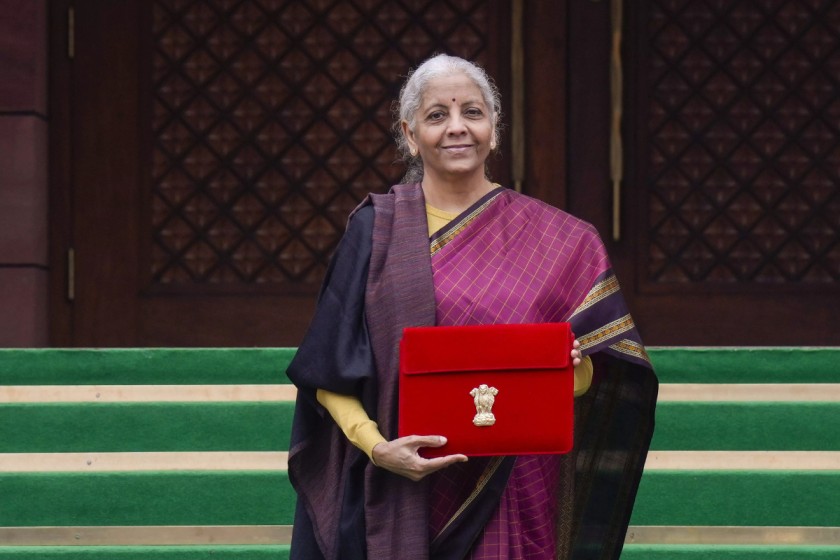
When Finance Minister Nirmala Sitharaman stood up to present the Union Budget 2026–27, one announcement cut through the usual fog of rate tweaks and compliance jargon: share buybacks will now be taxed as capital gains.
On paper, it looks like just another technical reform. In practice, it marks a decisive shift in how the government wants corporate India to think about capital returns.
Under the new framework, promoters can no longer use buybacks as a low-tax escape hatch. Corporate promoters will face an effective 22 percent tax, while non-corporate promoters will pay 30 percent. The intent is explicit—close the arbitrage loop that allowed surplus cash to be extracted from companies with far less tax than dividends would attract. This is not merely about revenue. It is about behaviour.
For years, buybacks had quietly evolved from a shareholder-friendly tool into a promoter-friendly strategy. Instead of distributing profits broadly through dividends, some promoters leaned on buybacks to consolidate ownership while minimising tax outgo. Minority shareholders often benefited incidentally, but the primary design was financial engineering.
By taxing buybacks like capital gains, the government is sending a clear signal: capital allocation should be driven by business logic, not tax gymnastics. Companies must now choose between dividends, reinvestment, or buybacks on economic merit alone.
Some firms will rethink planned buybacks this year. Others may pivot back toward dividends. A few may simply hold on to cash longer, waiting for clarity. In the short term, markets could see choppy reactions as investors recalibrate expectations around payout policies.
But zoom out, and the move fits into a much larger redesign of India’s direct tax architecture.
Alongside buybacks, the Budget pushes forward simplification of the Income Tax Act (effective April 1, 2026), streamlined tax forms, rationalised TCS rates, higher Securities Transaction Tax on derivatives, and a decisive nudge toward the new corporate tax regime. Minimum Alternate Tax will become a final levy at 14 percent, while MAT credits will be usable only under the simplified system. Accounting standards will also be harmonised, with separate ICDS accounting set to disappear from 2027–28.
Individually, these look like housekeeping measures. Collectively, they reveal a consistent philosophy: fewer parallel systems, fewer grey zones and less room for creative compliance. This is a quiet but important evolution.
For decades, India’s tax framework accumulated layers like special regimes, carve-outs, exemptions and alternative calculations. Each solved a problem of its time. Together, they created complexity that rewarded sophistication over transparency. The new approach appears to favour a cleaner base with fewer workarounds, even if that means upsetting entrenched practices.
The buyback reform is emblematic of this shift. Rather than introducing another exception, the government has chosen alignment: treat buybacks like any other capital gain and move on.
There will be pushback. Promoters accustomed to financial flexibility will argue that buybacks are legitimate capital management tools. Market participants worry about reduced liquidity in certain stocks. Derivatives traders are already eyeing higher STT with concern. These are not trivial issues. But policy is ultimately about trade-offs.
What the Budget prioritises is predictability and fairness over optimisation. It bets that a simpler, more uniform system, where dividends, buybacks and profits are taxed coherently, will encourage healthier corporate behaviour over time, even if it pinches in the short run. In that sense, this is less a tax hike than a cultural reset.
India’s markets are maturing. Retail participation is rising. Global investors are watching governance standards more closely. In such an environment, allowing promoters to systematically arbitrage the tax code sends the wrong message.
By closing that door, Sitharaman is nudging corporate India toward a more transparent relationship with capital, one where distributions are straightforward, accounting is aligned and compliance is designed into the system rather than negotiated around it.
The real impact of this Budget will not be measured in next quarter’s buyback numbers. It will show up over years, in cleaner balance sheets, simpler filings and fewer clever structures. Sometimes reform does not arrive with fireworks. Sometimes it arrives with a rule change that quietly alters incentives and lets behaviour follow.