

- December 5, 2025
India Reroutes Exports as US Tariffs Bite
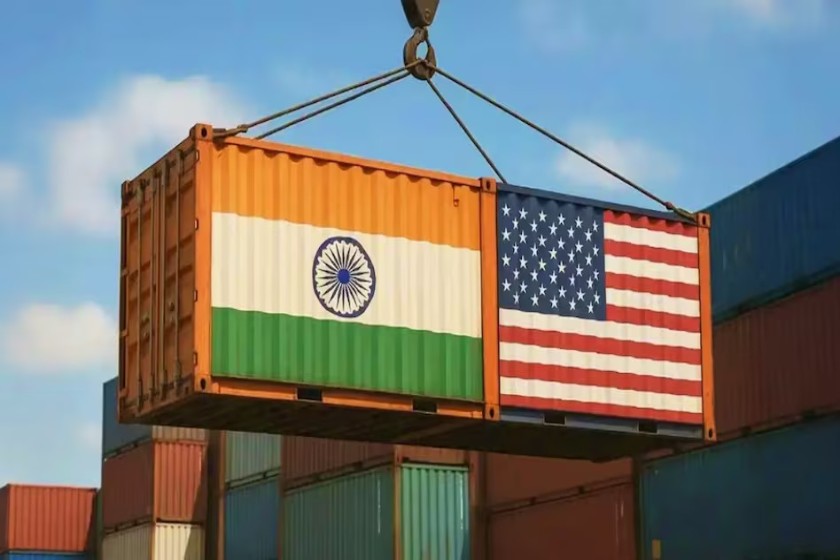
The full effect of the 50 percent US tariffs on Indian goods is now visible in two months of export data. The pain is real, but the picture is not uniformly bleak. The sharpest declines are in product lines heavily dependent on the US market, yet several high-value sectors have shifted direction with surprising speed. Cargo that once sailed almost automatically toward American ports is being rerouted to Asia, the Middle East and Europe. The result is that the immediate impact has been softened, even if the longer-term challenge remains unresolved.
The most dramatic adjustment is in gems and jewellery, where direct shipments to the US collapsed in September. The overall fall for the sector, however, was minimal. Exporters found customers in the UAE, Hong Kong and Belgium, replacing much of the lost volume. A similar pattern can be seen in auto components, which posted higher overall exports despite a double-digit decline to the US. Demand from Germany, Thailand and the Gulf absorbed the slack. Marine products, especially shrimps, have done even better. Orders from China, Japan, Thailand and the European Union have surged, lifting shipments through both September and October.
This redirection is not accidental. September and October were the first full months after Washington’s tariff decision, and Indian exporters have scrambled to rewire their supply chains. Trade negotiations show no sign of thawing, so companies are acting rather than waiting. But not every sector has that flexibility. Sports goods, where the US accounts for nearly half of all exports, could not find alternative buyers quickly enough. Cotton garments and leather footwear also suffered. Even when demand emerged in Europe and the Gulf, it was not enough to compensate for the steep fall from the US, where orders plunged by a quarter.
The government has been pushing hard to cushion the blow. Financial assistance worth more than forty-five thousand crore rupees has been rolled out, with credit guarantees aimed at smaller firms that struggle the most during such disruptions. Officials have advised exporters to avoid deep discounting in new markets, warning that aggressive price cuts can damage India’s long-term positioning. Competitors facing lower US duties, such as Indonesia and Ecuador, are filling part of the vacuum and are even raising prices, which has given Indian exporters breathing space in some niches. Marine products tell the most optimistic story. A rising number of seafood units have secured approvals from the European Union, expanding market access by a quarter in just a few months. Russia is also coming into view, with a batch of fishery units likely to be cleared soon.
Yet there are limits to how much trade can be redirected. Rough estimates suggest that perhaps two billion dollars’ worth of exports can find new homes quickly, well short of the eight billion dollars that went to the US annually before the tariffs. Shrimps are especially exposed because margins are thin and the US has been a dominant buyer. The domestic support package helps, but it cannot fully replace lost demand. The underlying risk is that the tariffs, if prolonged, will accelerate a shift in buyer behaviour that becomes permanent.
There is another layer to this story. Trade data points to a quiet rerouting of goods through third countries. As direct Indian shipments to the US shrink, imports into the US from Australia, Hong Kong, Indonesia and Vietnam have risen. These countries face much lower duties, and container volumes suggest they have become transit points for products that might have originated in India. This is not unusual in global trade, but it complicates the narrative of loss. The official numbers in Indian export statistics look weaker, while some goods may still be reaching the American market indirectly.
The immediate lesson is that India’s export economy is flexible at the top but vulnerable at the base. Large, high-value sectors with existing networks in multiple regions can turn quickly. Smaller manufacturers dependent on one market struggle to pivot. The government’s challenge is to keep these firms alive through credit support and market scouting, even as diplomats try to reopen doors in Washington. The tariffs landed suddenly and are testing both resilience and imagination. The coming months will show whether the current detours become new pathways or merely temporary survival routes in a global trade map reshaped by politics rather than economics.